Types of Noses: What They Are and Their Differences in 2025
From the straight nose to the button nose shape, every contour reflects a world of diversity — and today’s aesthetics celebrate them all. |
Our noses are one of the most distinctive features of the face — shaping not just how we look but also how we express emotion, identity, and character. Just as no two fingerprints are the same, there are many different types of noses, each with unique contours, shapes, and proportions. From a straight nose to a button nose shape or even a Nubian nose, these variations reflect both genetics and ethnicity.
In recent years, growing awareness about nose types and their aesthetic influence has also led to a deeper appreciation of diversity — and a rise in cosmetic enhancements like rhinoplasty, which help refine nasal features while preserving individuality.
Let’s explore what is the most common nose shape, all types of noses, their characteristics, and how understanding them can help in achieving the most natural results for nose reshaping procedures in 2025.
Understanding the different types of noses
When people ask, “What are the different types of noses?” They’re often curious about what makes one nose distinct from another. The differences usually come down to a few key anatomical features — such as the nasal bridge, tip projection, nostril size, and angle between the nose and upper lip.
Each of these different nose shapes carries its own charm — and understanding their nuances can help guide aesthetic goals, especially when considering procedures like rhinoplasty.
Ethnicity nose shapes: The beautiful spectrum of diversity
Across cultures, ethnicity nose shapes vary widely due to genetics, climate adaptation, and evolution. For example:
- Caucasian noses tend to have higher bridges and narrower nostrils.
- Asian noses often feature a shorter bridge and wider nasal base.
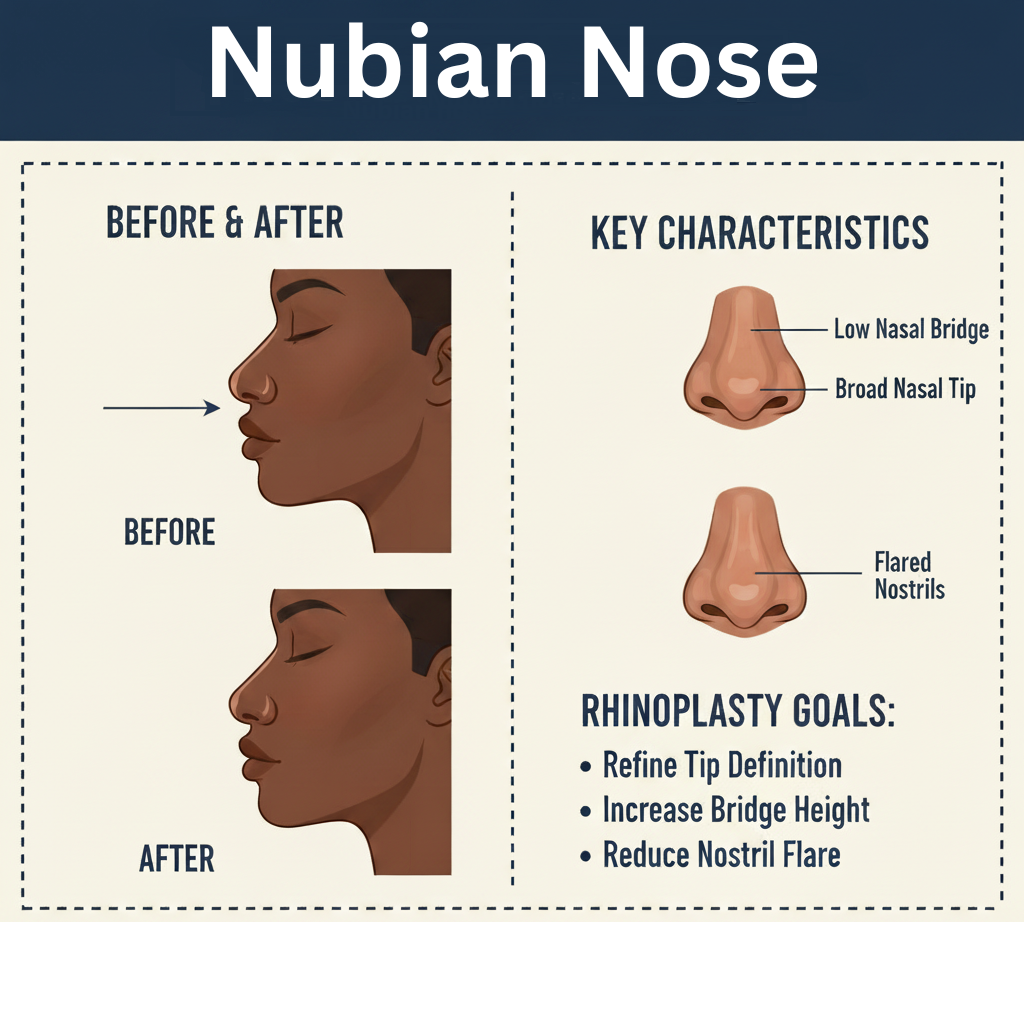
- African noses, such as the Nubian nose, generally have a wider nasal base and softer bridge contour.
- Middle Eastern noses may display stronger bridges and defined tips.
These different types of noses beautifully represent global diversity. In aesthetic medicine, understanding ethnicity nose shapes is vital — not to change identity, but to enhance balance and harmony while respecting one’s natural features.
Also Read – What Does An Attractive Nose Look Like?
Modern rhinoplasty techniques in 2025 focus on preserving individuality rather than creating a “standard” nose. Surgeons now use 3D imaging and personalized surgical plans to ensure the results complement each patient’s ethnic background and facial structure.
All types of noses and their common features
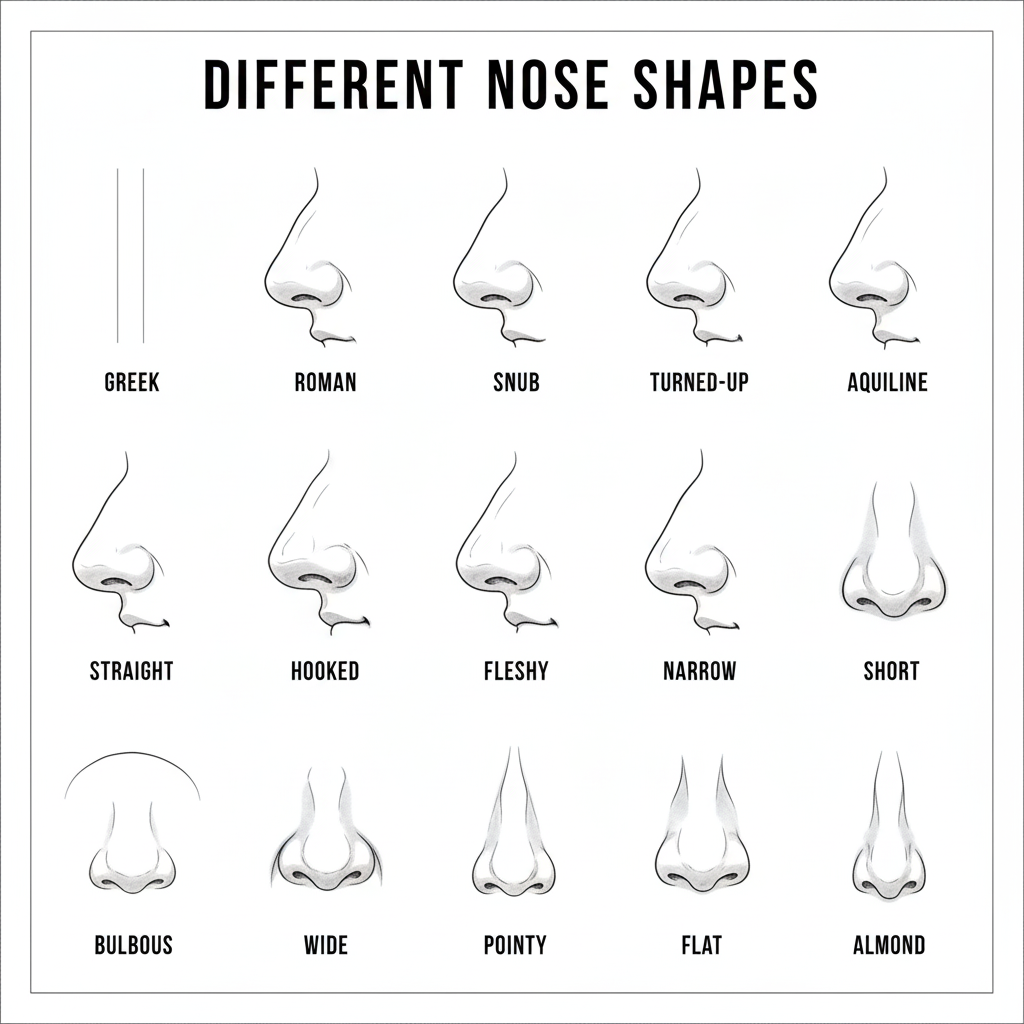
If you are wondering “what are the types of noses?”Here’s a quick overview of some of the kinds of noses most frequently categorized in facial anatomy and cosmetic surgery:
Nose Type | Key Features | Aesthetic Impression |
Straight Nose | Smooth bridge, defined tip | Classic, symmetrical look |
Button Nose Shape | Small, round, slightly upturned | Youthful and soft |
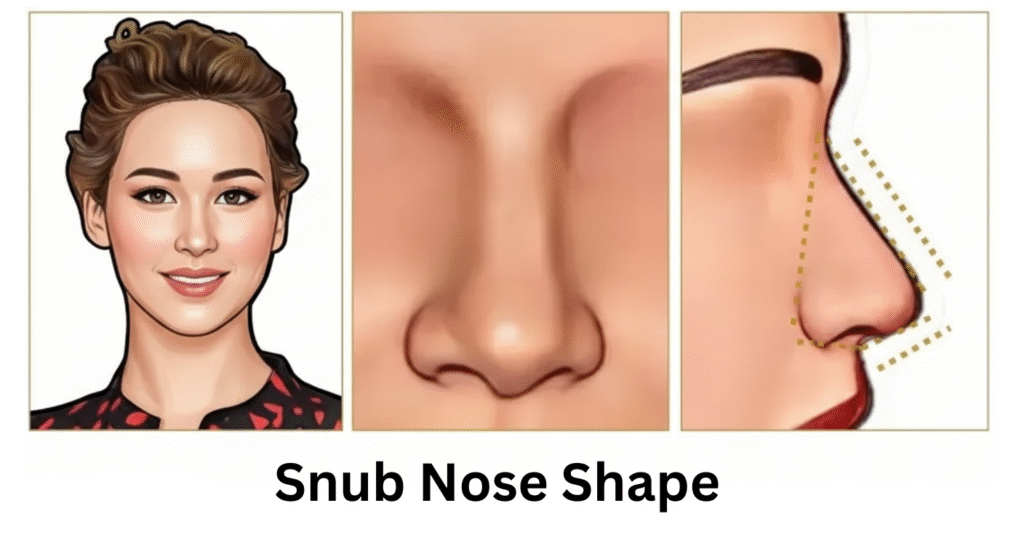
Snub Nose Shape | Short bridge, slightly tilted tip | Playful and gentle |
Nubian Nose | Broad base, elongated bridge | Distinguished and bold |
Roman Nose | Curved bridge, strong profile | Regal and powerful |
Fleshy Nose | Fuller and broader tip | Warm and approachable |
Hawk Nose | Curved with pointed end | Sharp and striking |
Celestial Nose | Subtle curve and elevated tip | Feminine and elegant |
Each of these nose types can influence how the face is perceived in terms of symmetry and proportion.
What is the most common and rarest nose shape?
When it comes to global averages, the most common nose shape is the straight nose, prized for its balanced proportions. It’s often associated with symmetry — a major factor in perceived facial attractiveness.
On the other hand, the rarest nose shape tends to be the snub nose shape, particularly when combined with an upturned tip and petite nasal bridge. These features occur less frequently in nature, which is why many cosmetic procedures aim to emulate that refined appearance.
Interestingly, what’s “common” or “rare” varies across regions. For instance, while the button nose shape is more prevalent among certain ethnicities, it’s considered uncommon in others.
Types of noses for rhinoplasty: Matching structure with aesthetics
When planning rhinoplasty, understanding the types of noses for rhinoplasty helps the surgeon tailor the technique to the patient’s natural anatomy and desired results.
Here’s how different nose shapes influence surgical planning:
- Straight nose: Often refined subtly to improve definition or correct minor asymmetries.
- Button nose shape: Usually enhanced with slight lifting or contouring to preserve a soft, natural look.
- Snub nose shape: May require careful adjustment of the nasal tip to maintain proportion.
- Nubian nose: Typically focuses on narrowing the base or reshaping the bridge while maintaining ethnic identity.
- Hawk or roman nose: May involve dorsal hump reduction or smoothing to achieve a gentler bridge line.
In 2025, rhinoplasty has evolved with more advanced, minimally invasive methods — reducing downtime and improving precision. Surgeons use high-resolution imaging and ultrasonic instruments for sculpting, ensuring smoother results and faster healing.
Whether it’s a surgical rhinoplasty or a non-surgical filler-based nose enhancement, the ultimate goal is always harmony — balancing the nose with the rest of the facial features.
Modern perception of nose shapes in 2025
As beauty standards evolve, so does the understanding of different nose shapes. Today, individuality is celebrated more than ever. Patients no longer seek one “perfect” nose but rather aim for refinement that enhances their natural appearance.
Thanks to advancements in facial aesthetics and technology, all types of noses can be enhanced with subtlety and precision — without compromising authenticity. The shift toward personalized beauty has made procedures like rhinoplasty more inclusive, respectful, and artistic.
Dr. Juan Carlos – Crafting timeless beauty through precision rhinoplasty in Dubai
With over 28 years of global cosmetic experience, Dr. Juan Carlos Barrera Rojas is a multidisciplinary plastic surgeon in Dubai known for his artistry, precision, and patient-focused approach. At Dubai London Clinic and Speciality Hospital, he specializes in both surgical and non-surgical cosmetic treatments — including rhinoplasty, facelift, breast augmentation, liposuction, and post-oncological reconstruction.
His deep understanding of different types of noses, ethnicity nose shapes, and advanced surgical methods allows him to deliver personalized results that enhance, not alter, natural beauty.
Beauty isn’t about changing who you are; it’s about refining what’s already uniquely yours. – Book your appointment today!