
Understanding Warning Signs After Tummy Tuck During Recovery
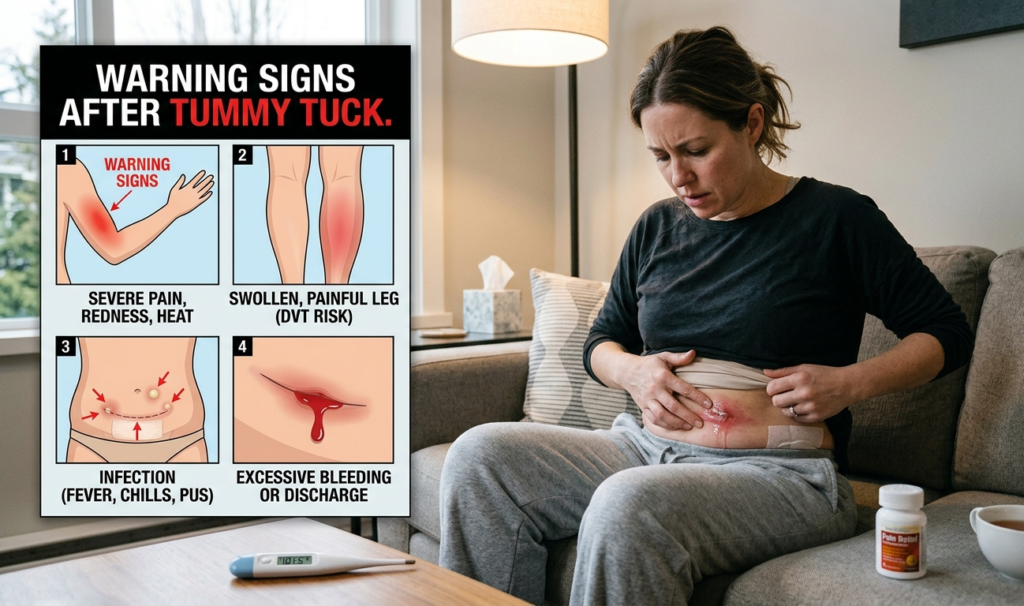
Recovering from a tummy tuck can bring a mix of excitement and uncertainty. While most patients heal smoothly, being aware of the warning signs after tummy tuck is essential to protect your results and your health. Recognizing the early warning signs after tummy tuck can help you avoid complications and protect your results.
Dr. Juan Carlos believes that informed patients recover better. Hence, he offers close post-operative monitoring, clear guidance, and timely interventions whenever needed. His patient-focused approach ensures that any concern, big or small, is addressed early, helping you heal safely and with confidence.
What does normal recovery look like?
Before diving into concerns, it helps to understand typical healing. The tummy tuck recovery time for tummy tuck varies, but most patients resume routine activities within 2–4 weeks, with full recovery taking a few months.
You may experience:
- Mild to moderate pain in the first few days (often called the worst days after tummy tuck)
- Swelling that changes over time (known as the stages of swelling after tummy tuck)
- Bruising and tightness
- Temporary changes in posture
Tracking your tummy tuck recovery week by week helps you notice anything unusual early.
Warning signs after tummy tuck you should never ignore
1. Excessive or Persistent Swelling
Some swelling is expected, and even 3 weeks post op tummy tuck swelling can be normal.
However, if swelling:
- Suddenly increases
- Feels uneven or fluid-filled
- Does not improve over time
It could indicate a seroma after tummy tuck (fluid buildup).
Solution by Dr. Juan Carlos:
He uses advanced drainage techniques and may perform a simple in-clinic fluid removal to prevent complications. Compression garments are also adjusted to support proper healing.
2. Severe pain or a rock-hard abdomen
It is common to feel tightness, but if you’re asking, “why is my stomach rock hard after tummy tuck?”, it may signal:
- Internal swelling
- Hematoma (blood collection)
- Early fibrosis
Solution:
Dr. Juan Carlos evaluates the cause through imaging if needed and modifies your recovery plan—this may include medication, massage therapy, or minor intervention.
3. Unusual discharge or foul smell
Clear fluid may drain initially, but yellow, green, or foul-smelling discharge can indicate infection—a serious tummy tuck complication.
Solution:
Prompt antibiotic treatment and wound care can prevent the situation from becoming a tummy tuck gone wrong scenario.
4. Skin turning dark or black (early necrosis)
One of the rare but serious concerns is early necrosis tummy tuck, where the skin loses blood supply.
Watch for:
- Darkening or black patches
- Delayed healing
- Increasing pain in a specific area
Solution:
Dr. Juan Carlos emphasizes early detection. Treatments may include specialized dressings, oxygen therapy, or minor surgical correction if needed.
5. Wound opening or delayed healing
Tummy tuck wound healing problems can occur due to tension, infection, or underlying health conditions.
Signs include:
- Wounds reopening
- Persistent redness
- Slow closure
Solution:
Dr. Juan Carlos uses tailored wound care protocols, including advanced dressings and close monitoring to ensure proper healing and minimal tummy tuck scars.
6. Asymmetry or poor contour
If your abdomen looks uneven or unnatural after initial swelling subsides, it may indicate a botched tummy tuck or technical issue.
These are often described as:
- Signs of a bad tummy tuck
- Botched signs of a bad tummy tuck
Solution:
Revision procedures can correct contour issues. Dr. Juan Carlos carefully evaluates and plans secondary corrections to restore natural shape.
7. Changes in lower body sensation
Some patients worry about changes in areas like the vagina after tummy tuck. Mild swelling or temporary sensation changes can occur due to fluid shifts and tissue adjustment.
Solution:
These changes are usually temporary. Dr. Juan Carlos reassures patients and monitors recovery to ensure everything returns to normal.
Understanding swelling: What’s normal vs. concerning
Swelling is one of the most misunderstood parts of recovery. Many patients search for pictures swelling after tummy tuck or track swelling day by day tummy tuck recovery.
Here’s what to know:
- Swelling peaks in the first 1–2 weeks
- It gradually reduces but may fluctuate
- Residual swelling can last up to 3–6 months
If swelling becomes painful, asymmetrical, or persistent, it needs evaluation.
Also Read – Is Liposuction Better Than Tummy Tuck?
Are Tummy Tucks safe?
A common concern is: is tummy tuck safe or are tummy tucks dangerous?
|
As per data |
However, risks increase with:
- Smoking
- Poor aftercare
- Choosing inexperienced providers
This is why selecting the right surgeon matters.
Does a tummy tuck remove fat?
Another common question is: Does a tummy tuck remove fat?
A tummy tuck primarily removes excess skin and tightens muscles. Some fat is removed, but it is not a substitute for liposuction. Combining procedures may enhance results.
When to contact your surgeon?
Do not wait if you notice:
- Sudden swelling or pain
- Fever
- Wound changes
- Signs of infection
Early action can prevent a minor issue from becoming a major tummy tuck complication.

A recovery journey you don’t have to face alone
Healing after a tummy tuck is not just physical; it can feel emotional, too. Small changes may cause worry, especially when you are unsure what is normal or noticing warning signs after tummy tuck.
Dr. Juan Carlos focuses on personalized aftercare, clear communication, and early intervention. His approach helps patients avoid complications and achieve smoother, safer recoveries.
Dr. Juan Carlos helps you recognize warning signs after tummy tuck early
Your recovery deserves careful attention at every stage. By learning to recognize warning signs after tummy tuck early, you give yourself the best chance at a smooth and stress-free healing process. Addressing tummy tuck wound healing problems or correcting a botched tummy tuck, timely care is key.
If something doesn’t feel right, trust your instincts.
With Dr. Juan Carlos by your side, you are never left guessing. His attentive follow-ups, prompt care, and personalized solutions ensure that any concern is managed before it becomes serious. If something feels off, don’t wait.
Reach out today and let expert guidance keep your recovery on the right track.
Your safety, comfort, and results deserve nothing less than attentive, experienced care!
Quick FAQs on warning signs after tummy tuck
Unusual swelling, severe pain, foul-smelling discharge, wound opening, or skin discoloration should be checked by your surgeon.
Yes, swelling is expected and can last several weeks, but sudden or uneven swelling may need medical attention.
Reach out if you notice warning signs after tummy tuck such as fever, increasing pain, fluid buildup, or delayed wound healing.
Uneven contours, persistent swelling, visible deformities, or poor healing may indicate complications.
Yes, a tight or firm feeling is common during healing, but extreme hardness or pain should be evaluated.
Yes, most issues, including warning signs after tummy tuck, can be managed effectively if identified early and treated by an experienced surgeon.